Collection of Fieldnotes - Masjid Al-Mawaddah Garden (MAM)
Collection of Fieldnotes
This series features a collection of field notes that we have taken in the various gardens in our 3-years Soil Regeneration project with National Parks Board Singapore.
To regenerate soil is to understand soil, and one key part lies in observing and documenting. This is a condensed version of the field notes that we have recorded in each of the gardens we worked with.
Summary of Fieldnotes
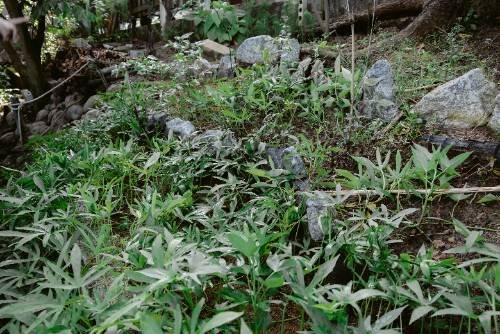
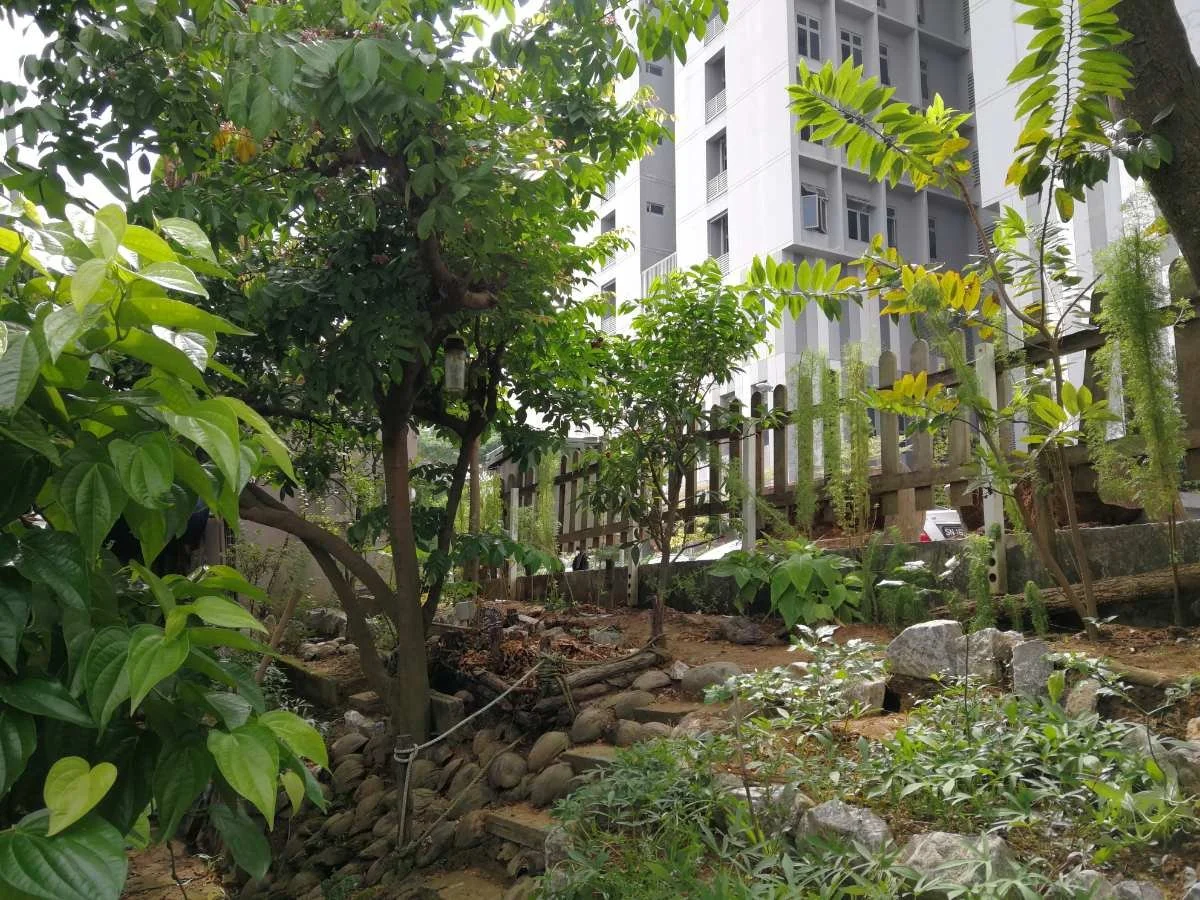
Month 0 (Feb 2021), the soil was hard and light brown colour. The soil feels sandy to touch. The sample plots are located on a slope, and the garden faces soil erosion. This part of the garden is quite shaded, but receives some afternoon sun. The soil smells earthy, and not anaerobic. The plots are home to several plants including noni tree, kafir lime, papaya, sweet potato leaves, and chilli. There are several trees as well, including neem tree and soursop tree.
Month 1 (March 2021) the gardeners started soil regeneration by building a hugelkultur plot. Gardeners dug a pit in the soil and buried twigs, branches, food scraps and plant trimmings before topping it up with the original soil. The plot was then mulched with leaves. After the hugelkultur plot was built, the gardeners continued to add compost or compost, and garden material (dried leaves and twigs) to the plot once every 2 to 3 weeks.
The gardener also collected horse manure from Pasir Ris Park and composted it separately in a compost bin before adding it to the garden plot.
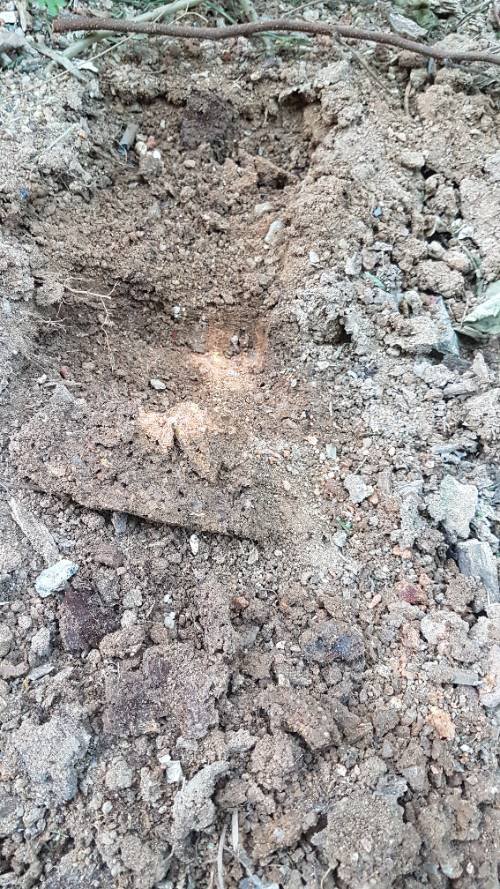
By Month 7 (September 2021), the gardener reflected that “the plants grow much better with the regenerated soil as compared to using chemical fertilisers. The chemical fertilisers help the plants to grow for a while but it plateaus. Whereas the plants keep growing better and better when she tops up with regenerated soil from the plot.” The top soil smells fresh and earthy, feels loamy and looks dark in colour.
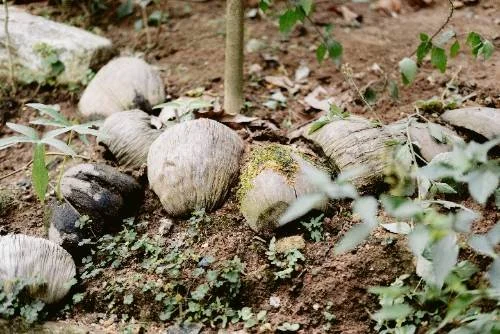
As the test bed was on the top of a terrace, the gardener used coconut husks that he collects from Pasir Ris Park and lined them at the sides of the terrace to prevent soil erosion.
Gardener continued to collect dried leaves from Pasir Ris Park to mulch as there was not enough dried leaves from the garden to mulch all the beds.
At Bukit Batok garden, bright blue tubs had been recycled to be used as plant pots.
However, gardeners sometimes encountered issues accessing these resources. MGS for instance was unable to access fallen leaves as workers hired by NParks contractors needed bags of leaves as evidence of their work to their supervisors. The issue was only resolved when the gardeners managed to talk to an NParks personnel to step in to bridge the communication.
Month 18 (Aug 2022) The top soil in the beds was observed to be a lot more loamy, and the color of the soil was reddish brown. In the hugelkultur bed, the soil was very easy to dig. The two other sampling spots was harder to dig - but easier than in Month 0.
Month 19 (Sep 2022), the gardeners were encouraged by the improvement of the soil in the sampling plot and decided to dig up much of the improved loamy dark top soil and use it as an inoculant to improve the soil in other parts of the garden.
Two new hugelkultur beds were then created using the same method, just about a metre away from the sample plot. The sample plot was then filled with clayey soil that they dug up when building the new hugekultur beds. Peanuts and sawtooth coriander was then planted in the sample bed.
By Month 22 (Dec 2022), the gardeners noticed that the trees surrounded by the hugelkultur plots were doing much better. The startfruit had improvements in the leaves and fruits, and the Marcotta daewah - God's crown was fruiting very well. The color of the fruits were more vibrant compared to before they started soil regeneration.
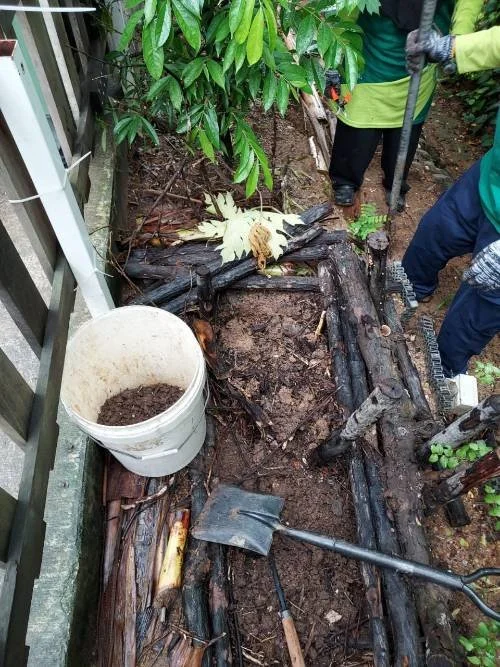
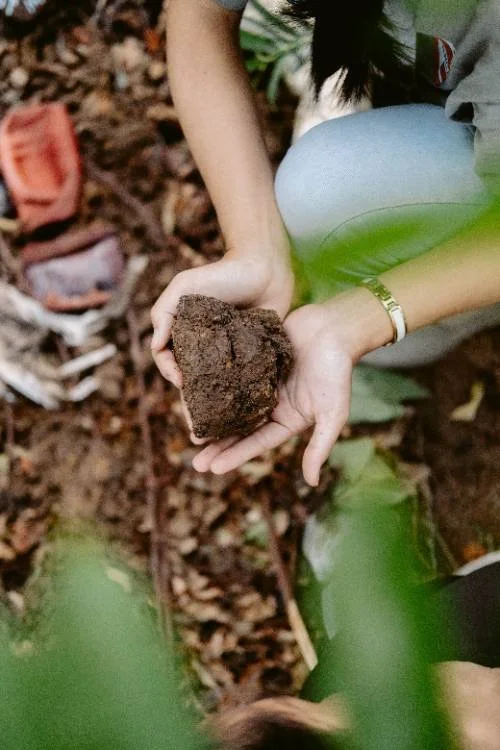
In Month 25 (March 2023), the gardeners harvested peanuts from the hugelkultur plot and the plot was left empty after harvesting. The soil was dark chocolatey brown in color.
From Month 27 - 30 (May - Aug 2023), the gardeners dedicated their time to revamping the garden terrace, making it into 3 layers instead of 2. The decision was made as they realised it was very hard to work on 2 high terraces. They also created a pathway in the centre with steps for easier access. The terrace was made with coconut husks and also slabs of rocks.
Month 27 (May 2023), the soil sampled was a lot darker than in Month 0, ranging from dark chocolate to caramel color. The top 10 cm of soil was uniform in color. Macroaggregates could be found. The soil felt loamy to sandy, and water drains well. The papaya tree that wasn’t fruiting well before, is now fruiting well. There were still many plants, like neem tree, jobs tears, sugar cane, sayur manis, cat whiskers and pea eggplant. The soil was not mulched.
In Month 30 (August 2023), the gardeners started mulching in the sample bed again. The soil was a dark chocolatey brown as usual.
Month 32 (October 2023), they started planting in the beds again - starting with tapioca, oyster plant and wormwood. One of the gardeners also started bringing bokashi ferments from home to bury in the garden beds.
October 2023 Fieldnotes:
“There was a fruiting haberano plant on the middle terrace, just beside the hugelkultur test plot. The gardeners reflected that this is the only spot where the haberano would grow and they believe it is because of the soil. The plants are all looking vibrant, without any pests or diseases.”
Month 36 (February 2024), during the last soil sample collection, the soil was observed to be chocolatey brown, clayey loam in texture with macro aggregates that break easily with little pressure. The soil was quite easy to dig. When we dug into the soil, we observed the gradation with the original orangey clay at the bottom, and the top part of the soil is now darker in color. The plots remained mulched, and the plants were doing well - Tapioca, oyster plant, wormwood, brazilian spinach, haberono chilli and costus ginger.