
About the Soil Regeneration Project
Learning Trail → Discover the Soil Regeneration Project
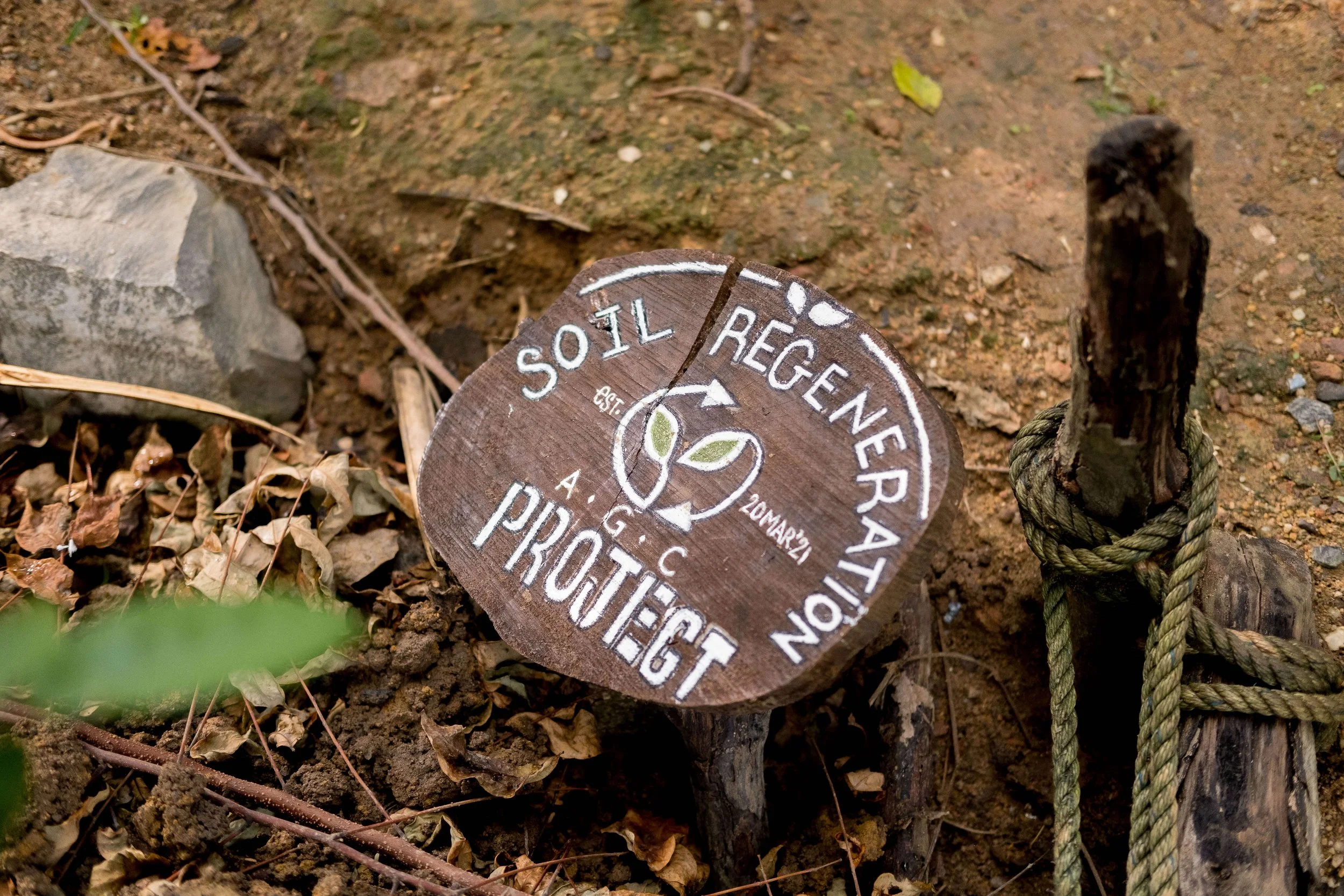
The Roots of the Project
The Soil Regeneration Project was a 3 year research project that we undertook in collaboration with National Parks Board Singapore (Nparks). It was the the very first community-led action research project that we embarked on.
The project aimed to look at the possibilities of soil regeneration in Singapore and served as an exploratory study to better understand how soil regeneration is practiced here in our hyper urban city. We journeyed with 10 different community gardens in Singapore over the course of 3 years, and documented the garden’s journey through interviews, fieldwork, and numerous conversations with the gardeners. Along with the qualitative data, we also did a series of soil lab tests over the years to observe the changes in the soil profile, including pH levels, nutrient content, organic matter and more. With this project, we hope that the data gathered would help us to better understand efficacy of soil regeneration practices in community gardens in Singapore.
From the years of collective lived experience, we knew that soil regeneration works in Singapore, but the question was how, and how effective is it, and can we expand it to a nation wide level? These questions propelled us to embarked on this exploratory study, leading us to this amazing journey with the both practitioners who have been regenerating soil for a long time as well as with gardeners who were just starting on this journey.
Research Questions:
The project had three research questions that we sought to answer over the course of the project:
01. What practices are gardeners with experience in regenerative practices using, and what challenges do they face?
02. How does soil quantitatively compare across time in these gardens on a range of chemical and physical properties?
03. Can qualitative recordings of gardeners' practices explain the changes and help us find best practices for real-life community gardens - in all their best and worst, and just-enough situations?
The Process
10 community gardens were selected and allocated to two groups: Group A and Group B. Group A were gardens that had been practicing soil regeneration. From these gardens, we observed and learned some of the regenerative techniques that they had been using. Group B were gardens new to soil regeneration. In was in these gardens that we measured the impact of implementing soil regeneration practices across the three years. At the beginning of the project, we held workshops introducing them to regenerative techniques and subsequently measured the improvement of soil quantitatively and qualitatively.
Want to meet the gardens? Learn more about them here!
The Harvest
Soil Impact
The research project, concluding in 2024, was an enriching and fertile experience! Across the course of the three years, many of the gardens saw a substantial transformation in their ground from soil without much visible life, to fluffy, dark chocolate soil. The best way to see the difference is to look at it! Below are maps representing the soil before and after the regeneration. Afterwards, the soil across all the gardens was darker, fluffier, and healthier. It was encouraging to see the scale of difference made in a relatively short period of time.
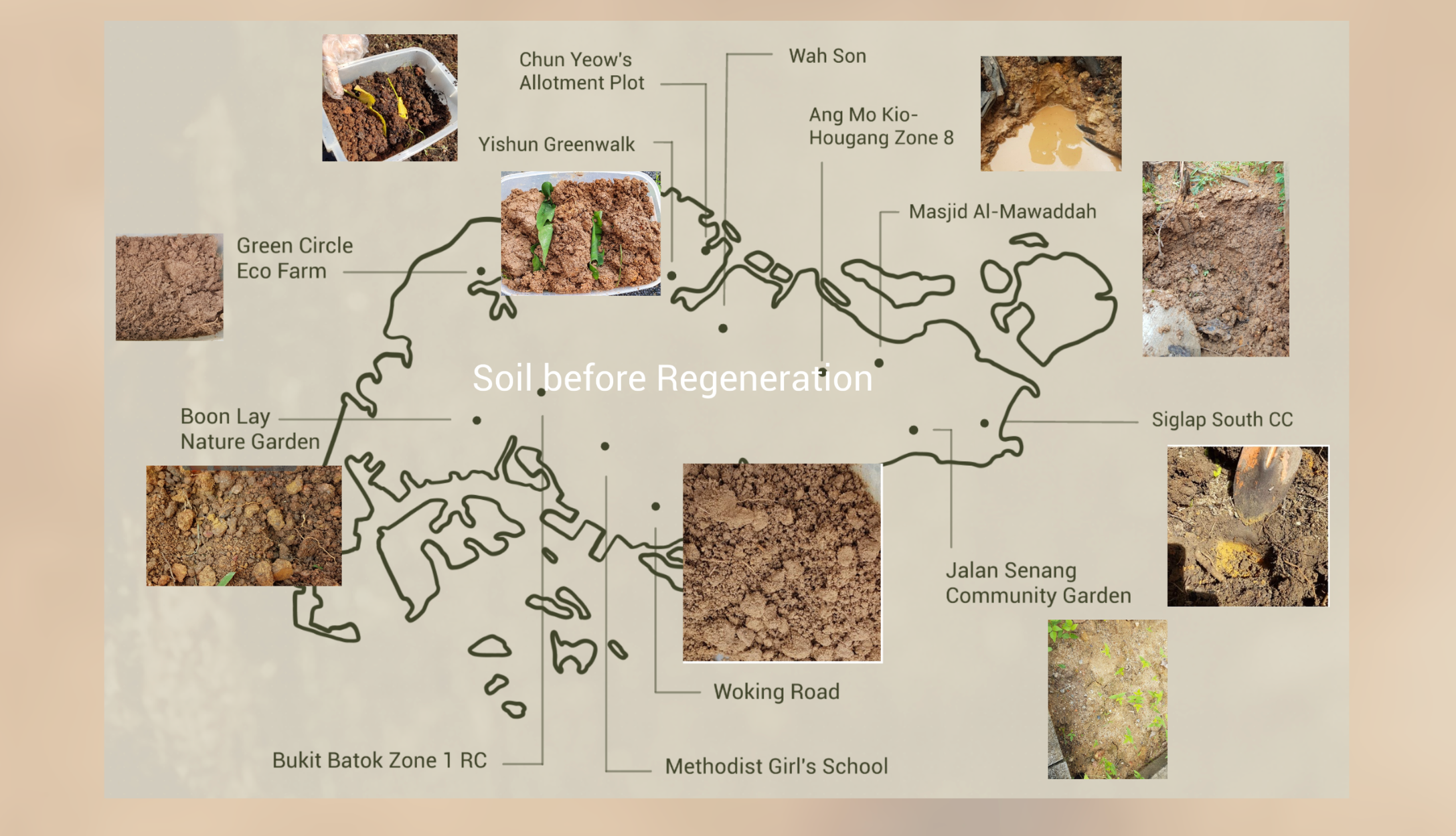
The gardens’ soil at the beginning of the project
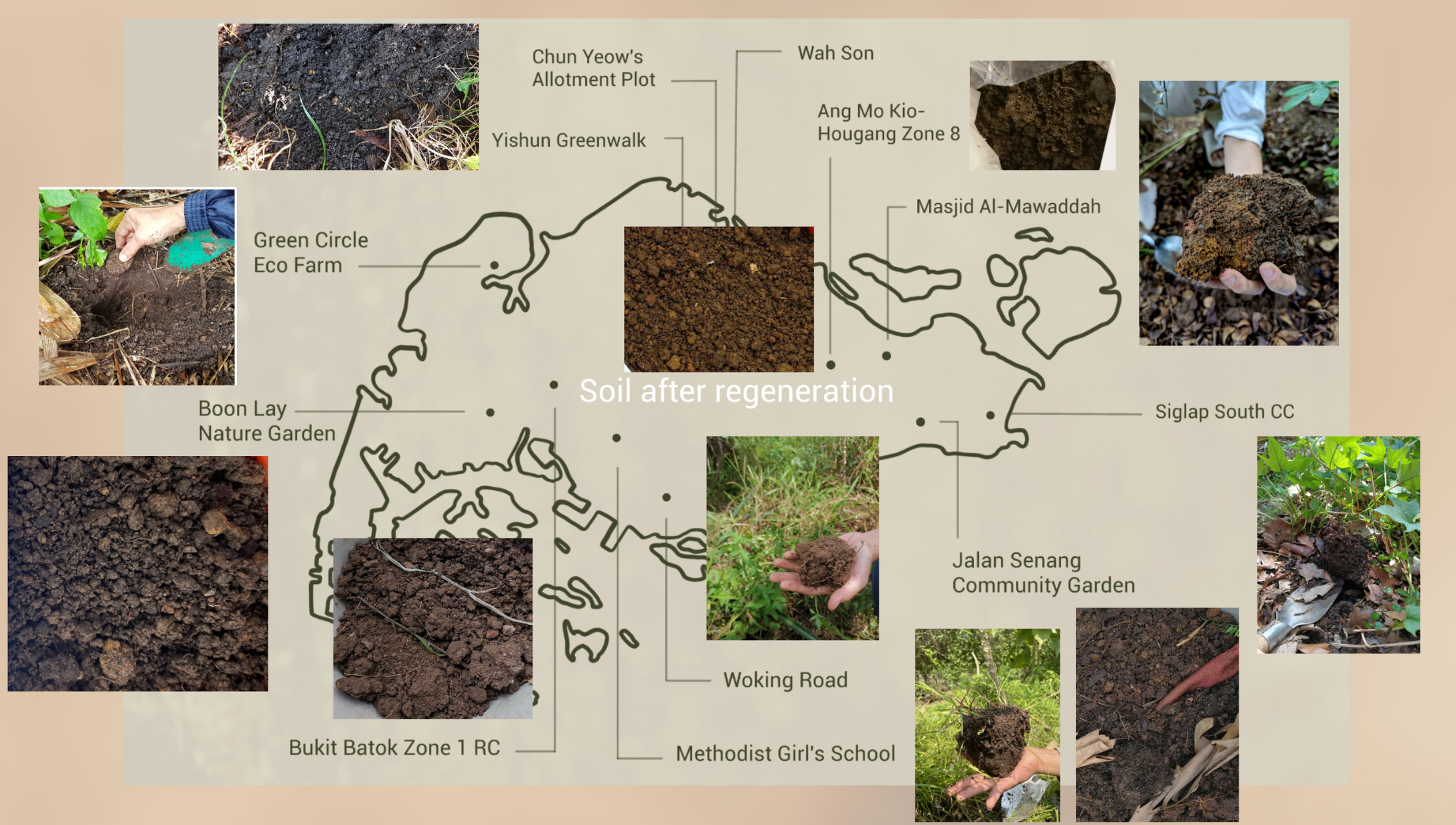
The gardens’ soil after the regenerative practices had been used for 3+ years
Public Sharing
At the end of the research project, we hosted a public research sharing with our community where we gathered gardeners, partners, and friends together to learn about the experience and findings of the project. The presentation that we shared at the event, contains photos and useful information of the three year process. It also breaks down our key findings!
Research Paper
We also published an academic paper on the research in the journal. This paper is the formal culmination of our research project, We also share some of the underlying data that was used to feed into the research paper, for example a garden log that documented qualitative observations.
Educational Content & Learnings
Many of our learnings from the project and the gardens have fed into educational content that we share to this day. We run regular soil courses, where our garden experiences serve as key case studies through which we share about the importance of soil regeneration in the wider ecosystem that we live in.
We are also starting to distill these learnings on this very website, for example, an article on preparing different plant beds, a guide on plants that help regenerate the soil, or a story about soil regeneration in Singapore and soil companions, gardeners who cultivate a relationship with the land they tend to.
Acknowledgements
The Soil Regeneration Project is only made possible with our key partners: the National Parks Board Singapore - Dr Phillip and Edgar for their advice, knowledge, soil tests and patience working through the papers with us. Potato Productions for supporting the team to be able to do this and for enabling us to put our hearts and minds, time and energy into the project. The community gardeners for their openness to share and the commitment to stay with this project. And the hidden communities below the ground, the fungi, the athropods, the protozoa and more for the hidden hard work they do to create a thriving ecosystem on this planet.